No Chairlift Required: A Tartiflette for a Soggy November Tuesday
There are two kinds of people in November. The first book a chalet, buy a neck gaiter, and say things like “the light is extraordinary up there.” The second look at the weather app, see a week of drizzle, and decide that the only mountain they intend to scale is the one formed by the laundry basket.
This article is for the second group. Possibly also for the first group, once they have come home and remembered that they own an oven.
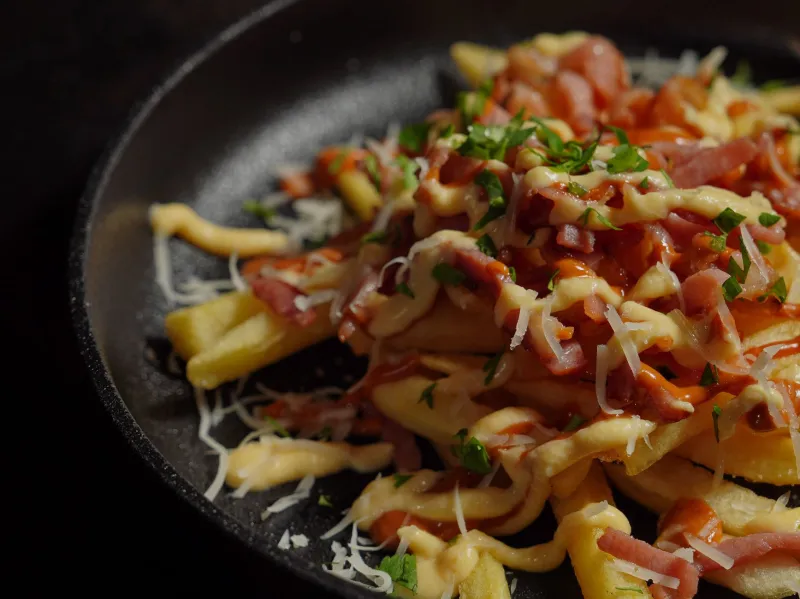
Tartiflette is a dish from the Savoie that was, depending on whom you ask, either a peasant staple or a marketing wheeze dreamt up in the 1980s to shift more reblochon. Either way, it is potatoes, bacon, onions and cheese baked until it smells like a chalet that has been let to eight people who all brought their own fondue sets. It is not refined. It is not clever. It is extremely good on a Tuesday when the boiler is making that noise again.
The case for one dish and no performance
The raclette machine is a lovely idea in the shop and a hostage negotiation by 9pm. You need the machine, the little paddles, the plates, the extension lead, and a room with enough space for everyone to sit around a hot cable without knocking over a glass of Savoie white. It is brilliant fun if you have the energy. In November, most of us do not have the energy. We have a jumper and a vague sense of dread.
Tartiflette asks for one ovenproof dish. It asks for a knife, a chopping board, and the ability to slice a potato with some care. It does not require a performance, a set of special forks, or a lecture about the terroir. You can make it in a roasting tin. You can make it while listening to the radio. You can make it while wearing the sort of trousers that would be refused entry to a ski lodge.
And it is cheap, or at least cheaper than it pretends to be. Potatoes, onions, smoked bacon, cream, cheese. The cheese is the only expensive bit, and there are workarounds.
The cheese question, or: what to do when the reblochon is nine pounds
Proper Savoie reblochon has a nutty, washed-rind funk and a melting point that makes it the correct choice. If you find a whole one at a sensible price, buy it and feel quietly superior. If you find only a small, supermarket-packaged “reblochon-style” cheese, that is fine. It will do the job.
If the real thing is beyond the budget, use a whole Camembert or a small Taleggio. Both melt with dignity and both bring a bit of rind-fed savouriness. Do not use cheddar. Cheddar in a tartiflette is like putting a hi-vis jacket on a poodle: technically it covers the body, but it misses the point entirely. Cheddar splits, leaks oil, and sulks. Leave it in the fridge.
You want about 250g of cheese for a dish serving four to six. Cut it into thick slices or wedges, rind on, and lay it over the top at the end so it browns and blisters without turning into a puddle of grease.
The no-boil shortcut and its limits
The classic method parboils the potatoes first. This is fine if you have the time and a second pan. The shortcut is to slice the potatoes very thinly — about two to three millimetres — and bake them raw in the cream and bacon. They cook through because the oven is hot and the cream is patient.
The limit is obvious: if you slice them thick, they stay crunchy. A mandoline is your friend here, or a sharp knife and a willingness to go slowly. The slices should be thin enough to bend without snapping. If you can read a newspaper through one, that is probably too thin. If you can use it as a coaster, start again.
Fry the lardons or chopped smoked bacon until they have released their fat and gone a bit golden. Soften sliced onions in the same pan. Layer the potatoes, bacon and onions in a buttered dish, season lightly, then pour over a mixture of double cream and a splash of white wine or chicken stock. Cover tightly with foil and bake at 190C fan for about 45 minutes, until a knife slides through the potatoes with no resistance. Then uncover, lay the cheese on top, turn the oven up to 200C and bake for another 15 to 20 minutes, until the top is bronzed and bubbling in a way that suggests good things.
Let it sit for ten minutes before serving. This is not optional. It is molten.
Scaling for the doorbell
The dish scales in a straight line. Allow roughly 200g of potatoes per person, 75g of cheese, and 50g of smoked bacon. If two extra people turn up because the pub was too full, use a larger tin, add a little more cream, and give the covered stage an extra ten minutes. Do not crowd the dish. Tartiflette needs a bit of room to bubble.
Serve it with cornichons and a sharply dressed green salad — mustard, vinegar, a lot of black pepper — because the acid is what stops the whole thing from becoming a cheese-based sleeping pill. Bread is good for mopping. A cold white from the Savoie is traditional; a decent cider works; a glass of something fizzy and cheap is not a crime.
Any leftovers are best fried in butter the next morning until the edges go crisp, then topped with a fried egg. This is often better than the original, which is the true loophole of the whole enterprise.
The loophole itself
Tartiflette is not a ski dish. It is a wet-Tuesday dish. It is what you make when you want the idea of the mountains without the chairlift, the hire shop, or the person in the group who insists on “one more run” while everyone else is already in the car.
It is one dish, one oven, and a short list of ingredients that most supermarkets can manage. It does not need a committee. It does not need a machine. It does not need you to be anywhere other than your own kitchen, wearing your least disciplined trousers, listening to the rain against the window.
That is the loophole. Use it.