The Cold Potato Clause: How to Run a Raclette Night Without a Hostage Situation
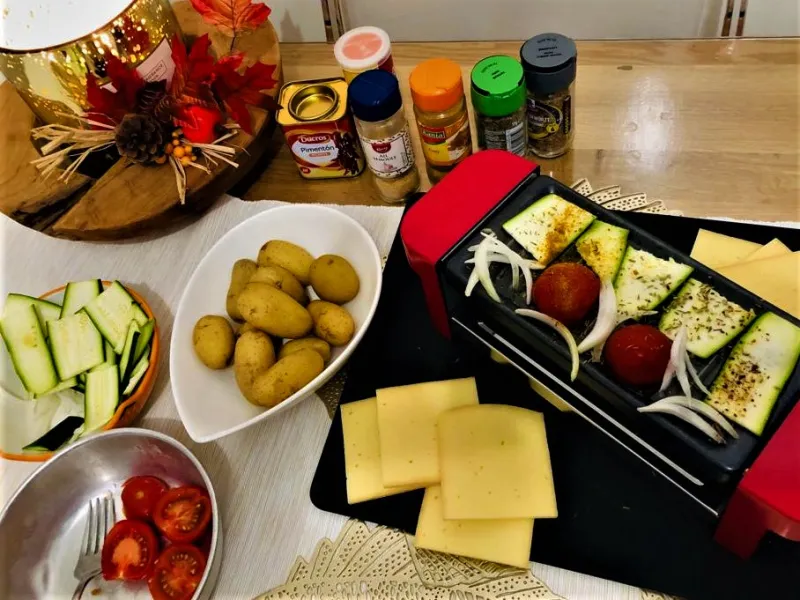
Photo: PiotrPiotrPl, CC BY-SA 4.0, via Wikimedia Commons
Raclette has a reputation problem. In Britain it turns up dressed as an event: a borrowed machine, an apron with a cow on it, a chiller-cabinet block of cheese helpfully described as 'for melting'. In the Alps it is much closer to a household chore that happens to be delicious. You melt cheese. You pour it over a potato. You do it again. Nobody claps.
That distinction is the whole game. The difference between a lovely winter evening and a fondue-themed hostage situation is never the cheese — it is the logistics. Sort those out and the table runs itself. Ignore them and you will spend the night standing over a single socket, spatula in hand, refereeing a dispute about whether pickled onions count as a vegetable.
First, the arithmetic of cheese
Budget 150g per person if your guests arrived by car, and 200g if they arrived on foot in the rain. British supermarkets now sell pre-sliced raclette that behaves perfectly well; a decent Comté, a Morbier or a young Savoyard from a proper cheesemonger will be better and cost more. Buy two cheeses, not five. A table with five cheeses becomes a tasting, and tastings develop opinions.
Avoid anything labelled 'raclette-style' that has never met a mountain. And buy more than you think you need. Raclette is the one meal where leftovers are a genuine failure of imagination: a spare slice of cheese goes back in the fridge, but the reputation of a host who ran out does not.
Potatoes: hot, waxy, non-negotiable
Small waxy potatoes, boiled in generously salted water until a knife slides in without resistance, then drained and kept warm. Not roasted. Not mashed. Not, under any circumstances, crisps.
The real trick is holding them hot for the two hours the meal will actually take. Wrap them in a clean tea towel and park them in a lidded pan, a low oven, a slow cooker, or an insulated flask if your worktop is already at capacity. This is the Cold Potato Clause, and it is not negotiable: cold potato refuses to hold melted cheese, a guest will notice, and the evening will quietly develop a grievance.
The pickle question
Cornichons, small silverskin onions, a jar of pickled walnuts if you are feeling expansive. Dijon on the table. Black pepper, ground at the table by somebody who is not you, because you are busy.
Ketchup is the fault line. Someone will ask for it. The correct answer is no; the correct host's answer is a small dish of it placed at the far end of the table, where it can do very little harm.
If you do not own a machine
Raclette machines are cheap, widely available and occupy a cupboard for fifty-one weeks of the year. Borrow one before you buy one. And if you do buy, count the portions honestly: the model that claims eight serves four hungry adults plus one person who is pretending.
Two workarounds, both legitimate:
- The grill method. Boil the potatoes, then lay slices of cheese over them in a shallow ovenproof dish and blast under a hot grill until bubbling and just catching at the edges. Not quite raclette, entirely dinner.
- The pan method. A heavy pan on a low flame, cheese in a small blini pan or heatproof dish set over the heat. Slower, more sociable, completely fine.
One rule regardless of kit: the machine must never share an extension lead with the kettle. That is how evenings end.
House rules for a table that keeps moving
- One slice at a time. Cheese piled three deep melts unevenly and burns on top.
- The person nearest the machine is its servant for one round only. Then rotate. Otherwise you have invented a job.
- Spatulas are not communal. One each, or a small plate per person.
- Nobody discusses work until the second cheese.
- Cheese travels clockwise, potatoes anticlockwise. This prevents collisions and gives the table a rhythm.
- The last person to arrive does the washing-up. Announce this before they arrive, not afterwards.
- Anyone who says 'I'm not really a cheese person' gets a small portion, no comment, and a second chance in twenty minutes.
What to pour
Something Alpine and unoaked: an Apremont, a Jacquère, a Chignin if you can track one down, or a light red Mondeuse. Cold lager is excellent and cheap. Dry West Country cider is not traditional in the slightest and works anyway.
Keep a jug of water on the table. Raclette is salty, guests will drink more wine than they intended, and they will blame the altitude, of which there is none.
Open a window. The smell of melting cheese is magnificent for forty minutes and then it is in your curtains. A pan of water with a slice of lemon simmering on the hob does a lot of quiet, unglamorous work.
How the evening ends
It ends, as all good negotiations do, in an unsatisfactory compromise: somebody says 'just one more slice', everybody agrees, and then a stray potato surfaces at the bottom of the pan and the whole thing restarts. Let it. Raclette was never meant to be a dinner party. It was meant to be a table where people lean in, argue gently, and spend four hours doing something extremely simple with their full attention.
You do not need a theme. You need enough potatoes, a warm tea towel, and the nerve to send the ketchup to the far end.