The One-Tin-Too-Many Rule: A French-ish Drinks Party for People Who'd Rather Not Cook
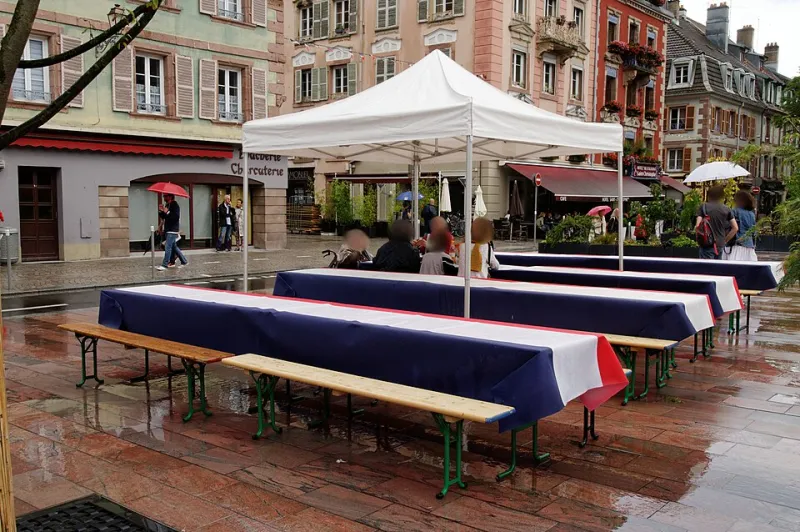
Photo: Thomas Bresson, CC BY 3.0, via Wikimedia Commons
There is a particular moment at a British dinner party when the host vanishes into the kitchen and the guests start examining the bookshelf. Apéro exists to prevent that moment. It is the French habit of having a drink and a few salty things before dinner — except sometimes there is no dinner, and nobody minds. That is the version I want to sell you: a French-ish drinks party that requires one supermarket bag, three bottles and absolutely no starter-main-pudding panic.
The case for not cooking dinner
Apéro is not a meal, and that is its genius. In France, it is a pause between work and life, a small ritual of olives, radishes, saucisson and something cold in a glass. In Britain, we tend to turn drinks into a crisis: canapés, trays, a hot thing that goes cold. The apéro approach says: sit down, open something, put out a scatter of salty, pickled, tinned and cheesy things. If people are still hungry at nine, they can have toast. This is not stinginess. It is civilisation with a corkscrew.
The beauty is that the food is almost entirely assembly. You are not cooking; you are arranging. You are also, if we are honest, hiding the packets before anyone arrives.
The one-bag shopping list
This is a big bag. A tote, not a handbag. Buy the good versions where it matters and the cheap versions where it does not. A UK supermarket can do all of this, though you may need to visit the deli counter with the air of someone who knows what they are doing.
- A baguette or two, plus a backup bag of good crisps
- A bunch of radishes, leaves on if possible
- A jar of cornichons and a jar of green olives
- Two tins of sardines in olive oil and one jar of anchovies
- A wedge of comté, aged cheddar or beaufort
- A small goat's cheese log
- Sliced saucisson or good ham
- Cherry tomatoes, grapes, a couple of endive heads
- Butter, a lemon, sea salt
- Taramasalata or rillettes if your supermarket is showing off
That is the whole party. You may also buy flowers, but only if they look like they were picked by a French aunt rather than arranged by a committee.
Three drinks, three moods
One: Crémant and salt. A Crémant de Loire or Bourgogne is the French-ish answer to champagne without the mortgage application. Serve it cold with the crisps, olives, anchovies and anything that makes your mouth water. The rule is simple: salty food makes bubbly taste more generous, and bubbly makes salty food taste more expensive.
Two: Pastis and radishes. Pastis is not a shot. It is a cloud in a glass: one part pastis, four or five parts cold water, plenty of ice. It tastes of anise, sunshine and slightly questionable decisions. Put it with radishes, butter and salt, saucisson, cornichons and olives. If you have a guest who says they do not like pastis, give them a smaller glass and more water. They will come round.
Three: The low-alcohol Lillet spritz. For the friend who is driving, pregnant or simply pacing themselves, make a Lillet Blanc spritz: a small measure of Lillet, lots of soda, ice, a slice of orange or lemon. It is low in alcohol rather than alcohol-free, so check with your guest. If you need a zero-alcohol option, a good bitter orange aperitif with tonic does the same job. Pair it with the cheese and grapes, because cheese improves almost every situation.
The madcap rule that makes it generous
Here is the rule: open one tin too many. Before anyone arrives, open an extra tin of sardines or anchovies that you had not planned to open. Put it on the table with a fork. Do not mention it. This is the One-Tin-Too-Many Rule, and it is the difference between hospitality and rationing.
A drinks party feels stingy when the host is visibly counting. It feels generous when the table looks as if more could arrive at any moment. So use the biggest bowls you own, even if they are half full. Slice more bread than you need. Put the butter out in a lump, not in a mean little curl. Open the extra tin. If nobody eats it, you have lunch tomorrow and a small sense of moral superiority.
The second rule is: never apologise for the table. If you run out of comté, say, 'Good, we needed more radishes.' If the baguette is gone, open the crisps. Apéro is not a test; it is a mood.
Ten minutes of assembly
Put everything in bowls. Radishes in a glass with an inch of cold water. Olives in a small dish. Cornichons in another. Cheese on a board, already cut. Baguette sliced, butter alongside. Open the tins and put them out with forks. Lemon wedges in a saucer. Grapes in a bowl. Crisps in the biggest bowl you own, even though the bag was small.
That is it. No oven, no last-minute panic, no mysterious smell from the kitchen. The only thing you need to do is keep the glasses filled and the tone light. If someone asks what is for dinner, look mildly French and say, 'This is dinner.' Then hand them a radish.
The graceful exit
At about nine o'clock, people will start to drift. This is not failure. This is the apéro doing its job. You have fed them, watered them and sent them home before anyone has to wash a roasting tin. You are left with a few olives, half a baguette and the pleasing feeling of having entertained without actually cooking.
That is the French-ish way: less performance, more butter. And one tin too many.