The Cake With a Bean in It: A Galette des Rois for the Crown-Shy
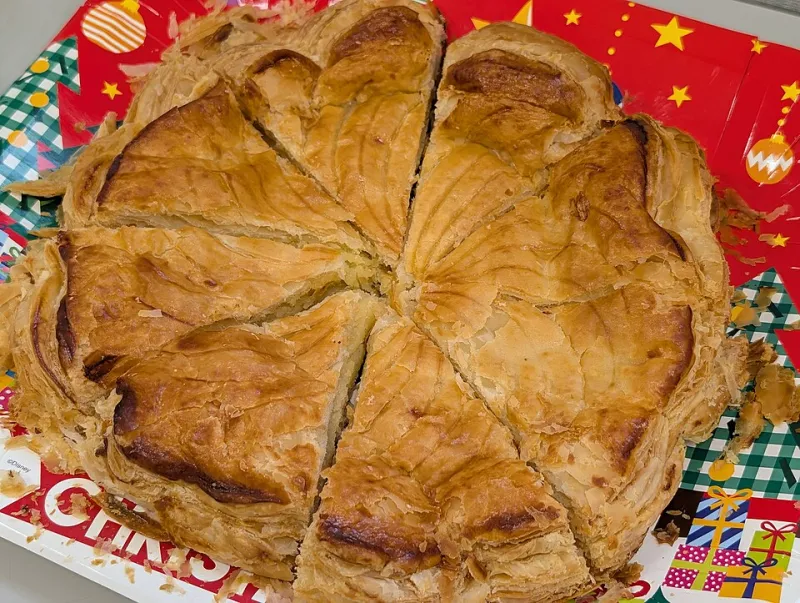
Photo: Syced, CC0, via Wikimedia Commons
January is a month with all the charm of a wet bus shelter, so anything that combines pastry, almonds and low-level jeopardy is welcome. The French answer is the galette des rois: two discs of puff pastry, a generous layer of frangipane, a hidden fève and a cardboard crown. It arrives around Epiphany, the twelfth day of Christmas and therefore the point at which even the most committed host has begun eyeing the tree with violence.
This is not the lurid, cinnamon-scented king cake of New Orleans. There are no plastic babies, no purple sugar, no Mardi Gras beads. A proper galette des rois is restrained, buttery and slightly smug. It is also one of the easiest French party tricks I know, provided you accept that the royal element is theatre for children and an excuse for adults to eat almond pie before noon.
First, the cake is not a cake
Think of it as a flat almond pie in a puff-pastry overcoat. You need two rounds of all-butter puff pastry and a bowl of frangipane. That is the whole architecture. The fève is a dried bean, a whole almond or a small ceramic charm, and the crown is cardboard. Any ceremony beyond that is optional and, frankly, suspicious.
Shop-bought all-butter puff is perfectly respectable here. The stuff made with god-knows-what and sold in a block the size of a paperback is not. In the UK, look for all-butter on the label and do not apologise for not making your own. We are aiming for properly-ish, not a patisserie exam.
The frangipane, without a stand mixer
Frangipane is almond cream, and it is forgiving. Beat 100g soft unsalted butter with 100g caster sugar until pale, then add two medium eggs one at a time. Fold in 100g ground almonds, a tablespoon of plain flour, a pinch of salt and a teaspoon of rum or almond extract. If you want to be fancy, stir in a tablespoon of thick custard or pastry cream for extra richness. If you do not, nobody will storm the kitchen.
The mixture should be soft but not runny. If it looks loose, chill it for twenty minutes before using. If it looks stiff, add a splash of milk. It is not a precise science; it is almond butter with ambitions.
The soggy-bottom problem, solved
Soggy bottoms come from three things: cold pastry, wet filling and timid heat. Use a hot oven, around 200C fan, and preheat a baking tray inside it. Roll your pastry on baking parchment, build the galette on the parchment, then slide the whole thing onto the hot tray. This gives the base a head start.
Leave a 2cm border when you spread the frangipane. Brush the border with beaten egg, lay the second pastry round on top, and press it down firmly. Crimp the edge with a fork or your fingers. Brush the top with egg wash, but do not let it dribble down the sides, or the layers will glue together and sulk. Score a pattern with a sharp knife, but do not cut all the way through. A grid is fine. A few leaves are nice. A single slash says you have made peace with your limitations.
Chill the assembled galette for at least twenty minutes before baking. Then bake for 30 to 35 minutes, until deep golden and puffed. If it browns too fast, cover it loosely with foil. Let it rest for ten minutes before slicing. This is not just politeness; hot frangipane is molten lava with a nutty accent.
The fève and the diplomatic incident
Before anyone takes a bite, say clearly: there is a bean in this cake. It is not a choking competition. The person who finds it is king or queen for the duration of the cake. They have no powers over the television remote, the seating plan or the next general election.
Traditionally, the youngest person at the table goes under it and calls out names as the slices are handed round. If your table is a coffee table, the youngest can simply point and shout. It is not a legal requirement. The point is to make the allocation feel random and faintly ridiculous, which it is.
For children, use a whole almond rather than a ceramic charm, and supervise. For adults who have made it clear they do not want to be monarch, have a second cardboard crown ready for the person who does. Or announce that the finder gets the washing-up. That usually settles the succession question.
How to explain it to baffled Brits
Keep the speech short. It is a French January thing. It is puff pastry with almond cream. There is a bean. You might be king. Please chew carefully. That is the entire briefing.
You can compare it to the sixpence in a Christmas pudding, minus the risk of dentistry. You can mention Epiphany, but do not turn it into a lecture. The galette is not a history lesson with a filling. It is a cake for a bleak weekend, and the best thing about it is that it gives everyone something to do with their hands while they discuss how dark it is at four o'clock.
Serving, leftovers and the crown question
Serve the galette just warm or at room temperature, not hot. A glass of dry cider is excellent. Black coffee is good. Cold milk for children is better than anything fizzy. Leftovers keep for two days and are genuinely improved by a few seconds in the microwave, though the pastry will never be quite as crisp. This is the price of progress.
As for the crown, resist the urge to buy a velvet coronet. A strip of card stapled into a circle is perfect. A Christmas cracker crown is even better, because it has already fulfilled its destiny and is now looking for a second career. If nobody wants to wear it, put it on the lamp. The cake is the point. The crown is a prop, the bean is a rumour, and the frangipane is the reason anyone came.
Vive la galette, and long live the person who remembers to chill the pastry.