The Gravy-Free Zone: A Poule au Pot for Sunday Roast Renegades
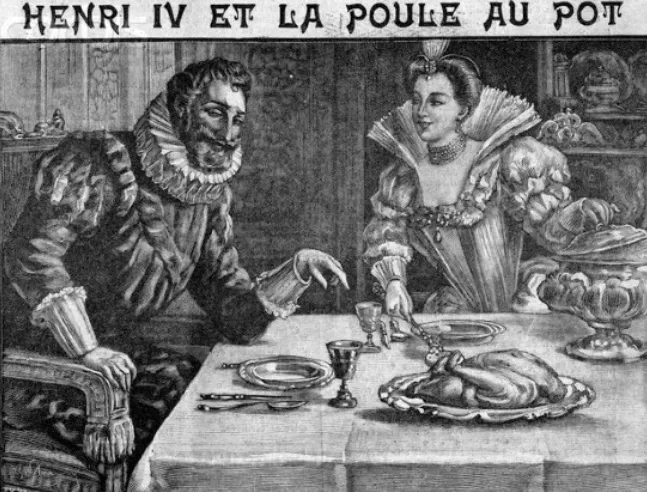
Photo: Playing Futures: Applied Nomadology, CC BY 2.0, via Wikimedia Commons
Sunday lunch in Britain is not a meal; it is a public examination with gravy. There is a bird to carve, a timer to obey, Yorkshire puddings to defend and at least one person who has opinions about the roast potatoes. By mid-November, the whole business can feel less like hospitality and more like a tribunal with parsnips.
This is where poule au pot comes in. It is French, it is old, and it has no interest in your carving knife. You put a chicken in a pot with vegetables and herbs, bring it to a murmur, and then leave it alone while you do something more interesting, such as sit down. The broth is the point. The chicken is the supporting act. Nobody stands at the head of the table sweating over a breast joint while someone’s aunt asks whether the gravy is ‘supposed to be that colour’.
Henri IV is said to have promised a chicken in every pot, which sounds generous until you realise he was probably just trying to avoid a Sunday roast. Either way, the idea is sound: one pot, gentle heat, two courses from one bird, and a Monday that looks after itself.
The bird is not the star
Use a free-range chicken around 1.6–1.8kg. A bigger bird sounds impressive but needs a bigger pot and more time, and the whole point is to ignore it. If you have an old hen, excellent — simmer it longer and enjoy the broth. If you have a supermarket chicken, also excellent; this is not a test. The chicken will give its flavour to the liquid. In return, you will not truss it, brown it, or carve it in front of an audience.
Shopping, without a quest
You do not need a market basket and a linen apron. One bag of soup vegetables, or a leek, two carrots, a turnip or a piece of swede, an onion, a couple of celery sticks if they are lurking, garlic, bay, thyme and black peppercorns will do. A bouquet garni is nice; a tea strainer full of herbs is fine. Add a splash of white wine if there is an open bottle, but do not open one for the purpose. A stock cube is not a crime. The French have been known to use them, quietly, while looking disapprovingly at other people.
The method, such as it is
Put the chicken in a pot that fits it snugly. Cover with cold water by about 2cm. Bring to the point just before a simmer, then lower the heat. Skim the grey foam if you like; if you don’t, it will not be a disaster. Add the aromatics, a good pinch of salt and a few peppercorns. Keep the water trembling, not rolling. A hard boil will make the chicken stringy and the broth cloudy, and nobody wants to be the person who boiled Sunday.
After about 40 minutes, add the carrots and turnip or swede. After another 20 minutes, add the leeks. The chicken should be cooked through — a thermometer in the thickest part of the thigh should read 74C — but it will be happier if you turn off the heat and let it sit in the broth for 20 minutes. This is not a recipe that demands precision. It demands a timer you can hear from the sofa.
Lift out the chicken. Strain the broth, skim the fat, and season it until it tastes like something you would be pleased to be handed in a mug. Cook a few small potatoes separately, or boil them in the broth near the end if you are feeling efficient. You now have two acts.
Act one: broth, and no apology
Serve the broth first, in bowls, with a little rice or fine noodles if you have them, a few slices of carrot and a scatter of parsley. This is not a starter in the restaurant sense; it is the main event wearing a smaller hat. It should be clear enough to see the bottom of the bowl and strong enough to make you sit up. If someone asks where the gravy is, tell them it has been promoted to soup.
The point is not to fill people up before the chicken arrives. The point is to make them slow down. A bowl of hot broth is a good way to stop a Sunday lunch from turning into a race.
Act two: the chicken, undramatically
Put the chicken on a platter and pull it apart with two forks, or cut it into joints with scissors if you are past pretending. Surround it with the cooked vegetables and the potatoes. Put Dijon mustard, a jar of cornichons and a small bowl of crème fraîche on the table. If you want a sauce, whisk a spoonful of mustard into a ladle of hot broth and let it loosen the whole thing. It is not gravy. It is better, because it came from the pot and not from a packet.
Make-ahead logic for the Sunday-averse
The whole thing can be made on Saturday. Cool the chicken and broth separately, quickly, then fridge them. The fat will set on the broth; lift it off and keep it for potatoes. On Sunday, reheat the broth gently and warm the chicken in it, off the heat, for 20 minutes. Do not boil it back to life. If you are making it on the day, do the poaching in the morning and leave it in the pot. It will not sulk.
Monday, with leftovers
Monday is where poule au pot earns its keep. Shred the remaining chicken with a fork, mix it with cornichons, capers, parsley and a mustard vinaigrette, and call it a salad. Reheat the broth with noodles, a handful of spinach and a squeeze of lemon. Or use the broth to cook rice, which will make the kitchen smell like a much more organised person lives there. If there is a carcass, simmer it again for another hour with a new onion and a bay leaf. The bird gives twice. The broth gives three times, if you are shameless, and you should be.
The quiet rebellion
Poule au pot is not a showstopper. It does not arrive at the table with a fanfare and a tiny jug of gravy. It is a Sunday lunch for people who would rather talk than carve, and who suspect that the best part of the roast was always the liquid anyway. It is forgiving, it is make-ahead, and it can be ignored for long stretches. That is not laziness. That is a different kind of confidence.
Serve it this November, while the light is doing that thing it does at 4pm, and let the chicken simmer while you ignore it. It will be fine. It is better than fine; it is broth.